The Tragic Beauty of The Last of Us
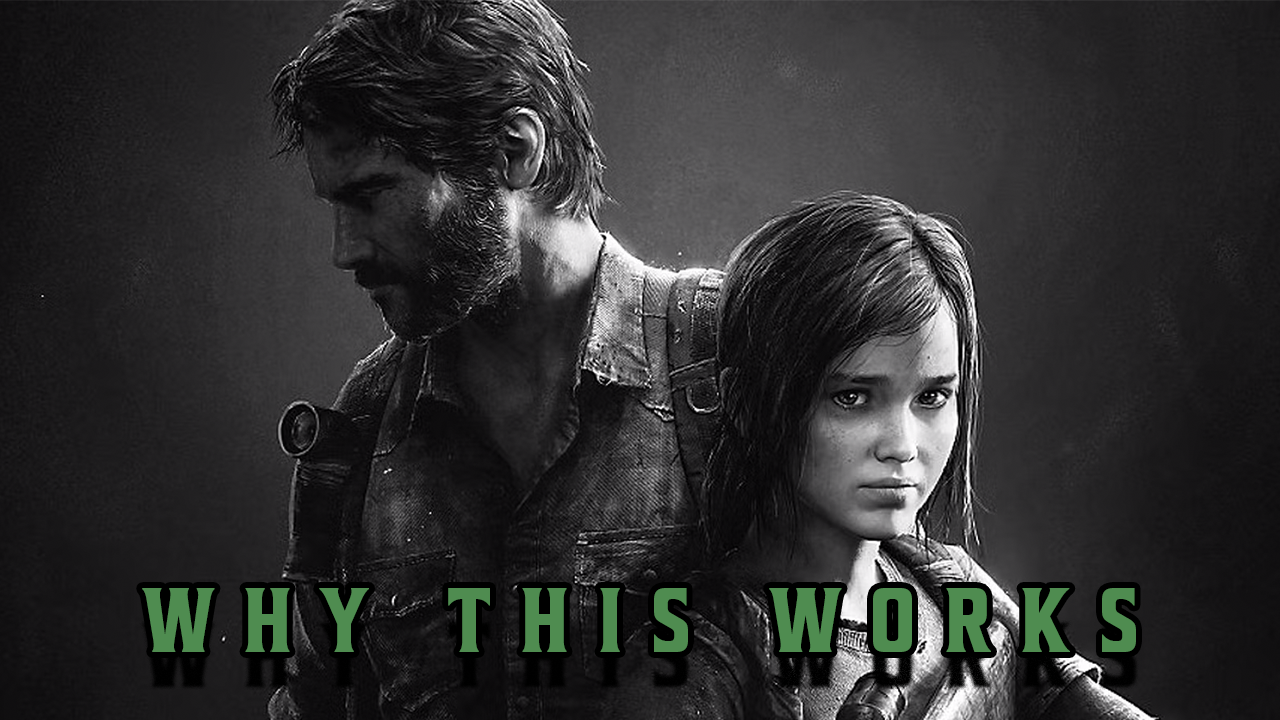
Why do certain video game stories grip us long after we put down the controller? Even a decade after release, The Last of Us continues to so beloved by fans because its ruined world feels painfully real. Set 20 years after a fungal outbreak, the game follows the smuggler Joel Miller and snarky teenager Ellie Williams as they cross what remains of the United States. The game’s timeless pull rests on three pillars: a world that tells its own story, a bond that feels real, and themes that challenge how we see love, loss, and choice. In this essay, we will explore how the shattered environment speaks to us, how Joel and Ellie’s relationship shifts from transaction to family, and how the game’s themes outlive any console cycle.
We’ll be covering the entire story of The Last of Us Part I. So, here is your spoiler warning. Cool? Cool!
So, without further ado, this is the Tragic Beauty of The Last of Us.
A Vibrant, Broken World
Step into Boston’s quarantine zone and ask yourself: What does a toppled traffic light say about society’s priorities? The post‑pandemic United States is a patchwork of crumbling cities, lush overgrowth, and lethal Infected. Creaking skyscrapers are draped in ivy while abandoned cars line the streets like forgotten tombstones. If you walk around a human settlement in a quarantine zone, you’ll find the Federal Disaster Response Agency, or FEDRA—the de facto US government post outbreak—choking the living, while just beyond the fences, lawless frontiers spread for miles.
Environmental storytelling fills the silent landscape with human echoes. A faded birthday card, a child’s drawing taped to a wall, a diary page that ends mid‑sentence—each object begs questions. Who wrote this? Did they survive? The answers never arrive outright; players piece them together to form personal micro‑stories in their minds.
If we zoom in on the non-infected humans, we’ll find multiple factions that mirror the world’s moral diversity. Hunters strip travelers of supplies, convinced that mercy equals death. The Fireflies dream of restoring democracy, yet their methods often lead to civilian deaths. FEDRA, meanwhile, enforces order with an iron fist. Even the infected embody time’s passage: fresh Runners still wear human faces while Bloaters, encased in layers of fungus, lumber like living fossils. Together, these details turn streets, rooms, and fields into characters. When Joel pauses in a sun‑lit lobby, or when Ellie tiptoes through spore‑clouded subway tunnels, the player is not simply passing through a level but conversing with a haunted landscape. That lived‑in feel keeps us emotionally present even when no dialogue is spoken because each stage of the story asks a simple question: What does it take for humanity to fade?
Joel and Ellie
Now let’s move our attention away from the environment and focus on the characters that show us the world of The Last of Us.
From the outset, Joel is a man hollowed by loss. He lost his daughter Sarah on outbreak day and has spent twenty years turning grief into grit. Ellie—who was born after the fall—knows only walls and curfews. She is immune to infection yet naïve to the wider world.
So, what happens when their paths cross? At first, Joel calls her “cargo,” simply a job to complete, while Ellie sees him as yet another adult who can’t be trusted. But as time passes, their relationship unfolds slowly. The turning point of their story arrives in winter. Joel is gravely wounded, leaving Ellie to hunt, trade, and fight to protect both him and herself. Basically a role reversal: the “cargo” becomes caretaker. When Joel awakens to find Ellie missing, the panic in his actions shows that duty has become love. Minutes later, he holds Ellie, trembling after her brutal escape from David’s lodge.
Similar emotional peaks are all over Ellie’s and Joel’s journey. In the ranch house, Ellie confronts Joel about his plan to abandon her. The argument feels like a teenage daughter calling out a father who is scared to love again. Months later, they stand before roaming giraffes in a flooded Salt Lake City plaza. The moment is wordless yet profound, a moment of innocence and joy contrasted by a background of misery and decay.
Finally, the hospital climax forces Joel to choose between the life he loves and humanity’s potential cure. While we can debate the morality of Joel’s choice, the one clear part about his decision is that he followed his heart, which had just reawakened after two decades of death.
It’s All About the Themes
What is love’s true cost? The Last of Us argues that love is a double‑edged sword. It can drive a man to become the most brutal version of himself to forget the loss of his child. But it can also lead that same man toward a path of destruction for the sake of one child.
Moral ambiguity is the cornerstone of The Last of Us. The game refuses a tidy hero label for Joel or the Fireflies. You pull the trigger, yet wonder whether it is right. Decisions that feel just in the moment ripple outward, hurting unseen people, which in turn can lead to more suffering in the future.
Loss and coping surface in nearly every chapter. Bill barricades his heart behind booby traps after losing his partner. Henry chooses suicide rather than live without his brother. Joel hides behind cynicism until Ellie reopens his capacity for love. Each survivor is wearing a different mask to hide the same grieving face.
But despite the misery, hope still shines. Seasons rotate from summer to a cautious spring, and life endures. Firefly graffiti, "Look for the Light,” tempts players to believe in salvation, while Ellie’s immunity teases a cure. Yet the ending twists that hope by asking whether the light is for all or just for one.
Conclusion
A decade on, The Last of Us Part I remains evergreen because its rich worldbuilding, fantastic characters, and timeless themes work together in harmony. The city ruins whisper backstories, Joel and Ellie’s bond plays out with novelistic nuance, and the moral questions linger in our heads long after we put down the controller.
And that’s it. The tragic beauty of The Last of Us. I hope you’ve enjoyed this essay. Until next time. Salam!